
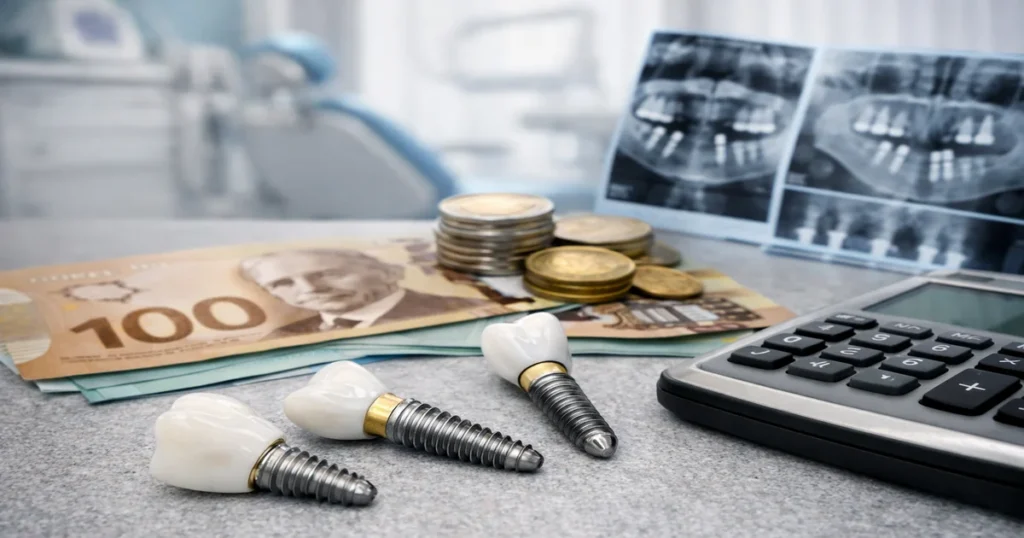

In Ontario, replacing a single missing tooth with a complete dental implant restoration typically ranges between $3,000 and $6,000. That figure usually includes the surgical placement of the titanium implant post, healing time, the abutment connection, and the final crown. The total investment increases if additional procedures, such as bone grafting, are required or multiple teeth need to be replaced.
In the sections below, I will explain what determines implant cost, how single-tooth implants differ from full-arch solutions, which additional procedures may affect pricing, how insurance works in Ontario, and how to evaluate whether implants are the right long-term decision for you.
What Determines How Much Dental Implants Cost
Dental implant pricing is not arbitrary. It is determined by anatomical conditions, surgical complexity, and restorative design.
Number of Implants Needed
The number of implants directly affects cost, but not always in a one-to-one ratio. For a single missing tooth, one implant supports one crown. However, if several teeth are missing in a row, two implants may support a three-tooth bridge. In full-arch cases, four to six implants can support an entire upper or lower arch through implant-supported prostheses provided under prosthodontic dentistry.
The more implants placed, the more surgical time, components, and laboratory work are involved. However, strategic planning often reduces the number of implants required while maintaining structural stability.
Need for Bone Grafting
Bone quality is one of the most important cost variables. When a tooth has been missing for years, the jawbone gradually resorbs. If bone volume is insufficient to stabilize the implant, grafting becomes necessary. Bone grafting in Ontario can add $500 to $3,000 or more, depending on whether the graft is minor socket preservation or more advanced augmentation.
Skipping grafting when clinically indicated increases the risk of failure. Proper evaluation during a comprehensive routine exam and imaging phase ensures that implant placement is biologically predictable.
Type of Restoration
An implant itself is only one component of the treatment. The restoration placed on top of the implant significantly affects pricing. A standard porcelain crown differs in cost from a custom zirconia bridge or a full-arch fixed prosthesis. Materials, occlusion design, esthetic layering, and lab craftsmanship all contribute to final pricing.
High-quality laboratory work ensures proper bite alignment, longevity, and natural esthetics. This part of the treatment is not a cosmetic indulgence; it directly affects function and durability.
Average Cost of Dental Implants
In Ontario, realistic ranges are:
- Single implant with crown: $3,000 – $6,000
- Implant-supported bridge: $6,000 – $15,000
- Full arch implant restoration: $20,000 – $35,000 or more
These figures reflect complete treatment phases rather than just surgical placement. Implant care is staged over several months to allow osseointegration, the biological fusion between bone and titanium. The cost represents surgical planning, sterile protocols, restorative precision, and long-term structural stability.
“The average cost of dental implants can range between $2,000 and $6,000 per tooth. Titanium implants cost less to manufacture, and are thus less expensive for use in dental procedures. The exact cost of titanium dental implants is based on the number of teeth being treated, your provider, and your location. X-rays, abutments, crowns, anesthesia, and tooth extractions are all considered separate costs.”
Additional Procedures That Affect Total Implant Cost
The total cost of dental implants is not limited to placing the titanium post. In many cases, additional procedures are required to create a stable, healthy foundation for long-term success. These steps are determined during clinical evaluation and imaging.
• Tooth extraction: If the damaged tooth is still present, it must be removed before implant placement. Surgical extractions involving fractured roots or infection increase time and cost compared to simple removals.
• Bone grafting: When jawbone volume is insufficient, grafting is required to securely support the implant. This adds surgical time, biomaterial cost, and healing time, but it is critical for implant stability.
• Sinus lift (upper jaw cases): In the upper back jaw, limited bone height may require sinus elevation to create space for implant placement. This is a specialized surgical step that increases overall treatment cost.
• Treatment of active gum disease: Any infection must be resolved before placing an implant. Therapy under periodontal treatment ensures the surrounding tissue can properly support the implant.
These procedures are not cosmetic add-ons. They are performed to reduce the risk of failure and ensure that the implant integrates predictably with the jawbone. Proper preparation protects both your oral health and your financial investment.
Does Dental Insurance Cover Dental Implants?
Insurance coverage in Ontario varies significantly. Some plans partially cover diagnostic imaging, extractions, or the final crown portion of the implant restoration. However, the surgical implant component is frequently only partially covered or excluded.
It is important to submit a pre-treatment estimate to your insurance provider before proceeding so you clearly understand your financial responsibility.
Are Dental Implants Worth the Investment
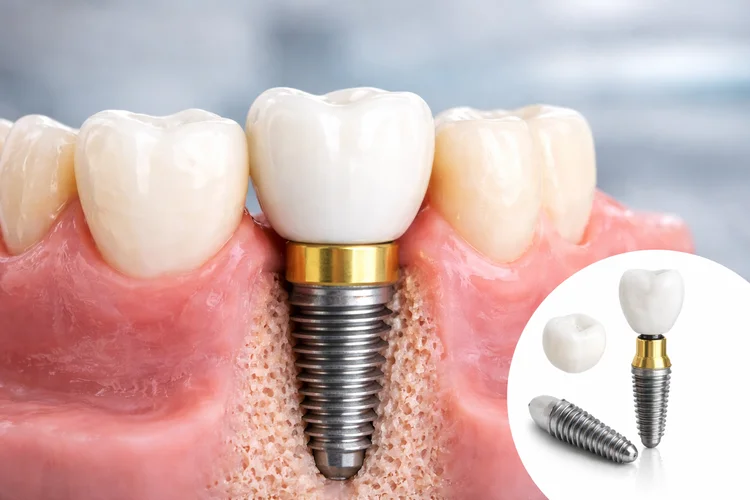
From a clinical standpoint, implants are the most stable and conservative solution for tooth replacement.
Unlike bridges, implants do not require reducing adjacent healthy teeth. Unlike removable dentures, implants preserve bone volume and maintain facial structure. Over time, bone preservation prevents the sunken appearance that often develops with long-term tooth loss.
Implants distribute chewing forces naturally through the jaw, reducing stress on surrounding teeth. With consistent maintenance through professional dental cleaning appointments and proper home care, implants can function for decades.
When evaluating cost, it is important to compare lifespan and biological impact, not just the initial fee.
If you are considering dental implants and want a detailed evaluation of your bone health, treatment phases, and total cost, schedule a consultation at Emerald View Dental in North York. We will provide a comprehensive assessment, review imaging findings, and outline a clear treatment roadmap tailored to your condition.
Plan Confidently For Dental Implant Costs
Dental implant treatment in Ontario typically ranges from $3,000 to $6,000 per tooth and increases depending on surgical complexity, bone condition, and restorative design. Bone grafting, sinus lifts, and multi-unit prosthetics significantly influence total cost, and these procedures are performed to ensure long-term stability rather than short-term correction.
At Emerald View Dental in North York, we approach implant therapy with detailed surgical planning and restorative precision. Our focus is on predictable integration, functional longevity, and transparent financial discussions so patients understand both the biological and financial aspects of their treatment.
FAQ
Before proceeding with implant treatment, patients typically want clarification about cost comparisons. The following answers address those practical concerns:
-
Why are dental implants more expensive than bridges?
Implants require surgical placement into the jawbone, healing time for osseointegration, and custom restorative fabrication. Bridges rely on adjacent teeth for support and do not involve surgery.
-
Is the cost of an implant for one tooth different from the cost of full-mouth implants?
Yes. A single implant replaces a missing tooth, involves one surgical site, and requires one crown. Full-mouth implant solutions require multiple implants, advanced prosthetic planning, and complex laboratory fabrication.
-
Are payment plans available for dental implants?
Many dental clinics offer structured payment options or third-party financing to distribute costs over time. Financial planning discussions typically occur during your consultation so that treatment can be scheduled responsibly.
If you are unsure whether implants are appropriate for your specific case, share your concerns or questions.
An informed decision begins with understanding your clinical situation in detail.
